OTHER INFLUENCES

Untitled design-4

Mental Health Endorsement

As a mental health endorsed occupational therapist, I am able to provide occupational therapy services under a Mental Health Care Plan. This means that women can access Medicare rebates for sessions focused on supporting their mental health and wellbeing.

Mental health endorsement is an additional area of qualification and practice recognition for occupational therapists. It involves a robust endorsement process through the Occupational Therapy Australia, including evidence of specialised mental health knowledge, clinical experience, supervision and ongoing professional development. This ensures that endorsed occupational therapists have the skills and capability to provide safe, effective and evidence-informed mental health support.

My approach to mental health is grounded in the belief that our emotional experiences do not happen in isolation. Our thoughts, feelings, bodies, relationships, environments, histories and everyday lives are deeply interconnected. When we understand the context of what we are experiencing, we can begin to respond to ourselves with greater compassion and create meaningful change.

Many women arrive feeling overwhelmed, disconnected from themselves, stuck in patterns they do not understand, or carrying experiences that feel difficult to process. Rather than asking, “What is wrong with me?” we can become curious about what your experiences are communicating and what parts of you may be trying to protect, cope or make sense of what has happened.

I have a particular interest in parts-based approaches, including Internal Family Systems (IFS) informed work and Community of Selves. These approaches recognise that we all have different parts of ourselves that show up in different situations – a part that worries, a part that pushes through, a part that feels overwhelmed, a part that wants to rest, or a part that longs to be seen and understood.

I also use Acceptance and Commitment Therapy (ACT), Cognitive Behaviour Therapy (CBT), and Compassion Focussed Therapy as modalities, alongside sensory and emotional regulation approaches and use of occupation as an anchor for supporting mental health and emotional wellbeing.

Through mapping and exploring these different experiences, we can begin to understand your internal world with curiosity rather than judgement. This can create space to reconnect with your values, strengthen self-compassion and develop new ways of responding to the challenges you face.

Mental health support can assist women to navigate their mothering transitions, or the “head game” that frequently arises with pelvic health experiences.

Young mother breastfeeding her newborn baby boy at home

Post-Natal Doula Training

My postnatal doula training has deepened my understanding of the profound transition into motherhood and the importance of nurturing mothers through this significant rite of passage.

Becoming a mother involves enormous changes across the brain, body, identity and sense of self. This process, known as matrescence, helps us understand that the transition into motherhood is not simply a change in circumstances – it is a deeply transformative experience that deserves acknowledgement, time and support.

This understanding has become an important part of the way I work as an occupational therapist. It helps me recognise that the challenges many mothers experience are not simply about managing tasks or adjusting to a new role; they are part of a significant biological, emotional and identity transition that influences how a woman moves through her everyday life. A developmental process, not a dysfunction.

I encourage women to explore traditional approaches to mother care – not as a set of rules to follow, but as a source of wisdom. These practices offer insight into the ways communities have supported women through birth, recovery and matrescence for generations. Together, we can consider what aspects of these traditions offered restoration, nourishment and healing, and explore how you might adapt and reinvent them to create meaningful rituals, routines and practices that honour your own needs, values and circumstances.

Because every woman, every body and every mothering journey is unique in how she wants to experience this support.

As an occupational therapist, I am always interested in how these practices can support your ability to participate in the everyday experiences that matter to you – your relationship with yourself, your baby, your family, your body, your work, your rest and your sense of identity.

Wherever you are in your mothering or parenting journey, the experience of being deeply nurtured and cared for can be received at any time as you seek greater connection, vitality and wellbeing.

Screen Shot 2019-06-27 at 1.10.36 pm

Spinning Babies Training

Spinning Babies® is an approach that supports women to understand their body, their baby’s position and the ways movement, balance and alignment can influence comfort and preparation for birth.

By exploring optimal fetal positioning, addressing areas of tension and supporting balance within the pelvis, muscles and ligaments, these techniques can help women feel more comfortable throughout pregnancy and more connected to their body as they prepare for birth.

During labour, specific techniques can support pelvic mobility and create space for the baby to navigate the birth process. Rather than focusing only on the mechanics of birth, Spinning Babies® offers women practical ways to build awareness, confidence and trust in their own bodies.

I love how Spinning Babies® is simple, accessible and empowering – it can make such a difference to a woman’s understanding of her body and her confidence as she approaches birth.

Alongside other occupational therapy support, Spinning Babies® techniques can be incorporated to support your goals for pregnancy, birth preparation and the transition into motherhood.

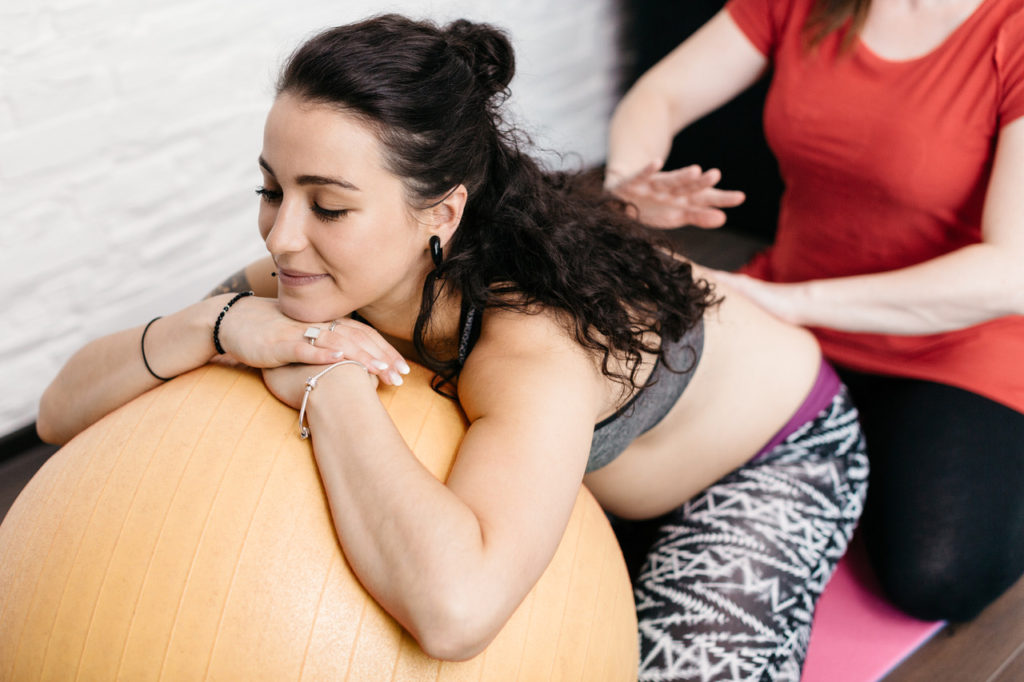
Pregnant woman getting a back massage from her midwife